

I Treated My Job Search Like a Marketing Campaign. It Worked.
TLDR: I got laid off in May 2026 and immediately started running my job search like a growth marketing campaign: defining my ICP, rebuilding my conversion assets, testing messaging, and tracking everything. My highest-performing channel was LinkedIn organic content, which outperformed a boosted post by nearly 6x on impressions and 116x on saves. I applied an AEO strategy using Reddit and schema markup that got me surfacing in LLMs within days. Exactly three weeks after my layoff, I’ve signed an offer. This campaign is how.
The Mindset Shift
Getting laid off is weird. You know it's not personal, but it still stings. I was shocked, I was hurt, and then almost immediately, I was motivated, because wallowing wasn't going to find me a new job.
I'm a growth marketer. Building campaigns is what I do. So that's exactly what I did, except this time, the product is me.
That reframe changed everything. It turned a stressful, reactive process into something I actually know how to run.
The Assets
In between job applications, I rebuilt everything a recruiter or hiring manager might land on.
In addition to updating my resume, I also thought critically about my LinkedIn content and how I want to show up on that platform.
I built a portfolio based on a friend’s suggestion, but ultimately ended up launching a full personal website at katiefrankmarketing.com (portfolio, travel, about, blog, FAQ, contact) and treated the technical setup the same way I'd treat a campaign launch. That meant adding six schema types as a JSON-LD block in the site header: Person, WebSite, ProfilePage, FAQPage, CreativeWork, and Blog. Google's Rich Results Test returned zero errors and zero warnings. I submitted the sitemap, requested indexing page by page, and set up an analytics filter to exclude my own visits.
The Channels
My ICP was clear from the start: B2B SaaS with a technical audience, Growth Marketer or Demand Gen Manager roles, remote. That focus made every application more intentional and every message easier to write.
My highest-performing channel was LinkedIn. Not because I was posting "open to work" content, but because I was posting things I actually knew, cared about, and lived through. The series I ran covered my job hunt in real time: the layoff, the campaign framework, my career origin story (I started at a rubber gasket manufacturer in steel-toed shoes), the customer success years that made me a better marketer, and a completely objective video about why someone should hire me that may or may not have featured my cats as one of the reasons.
The most interesting data point came from an experiment. I boosted one post as a LinkedIn ad, targeting marketing and growth leaders at B2B SaaS companies. I left another post organic.
Here's what happened:
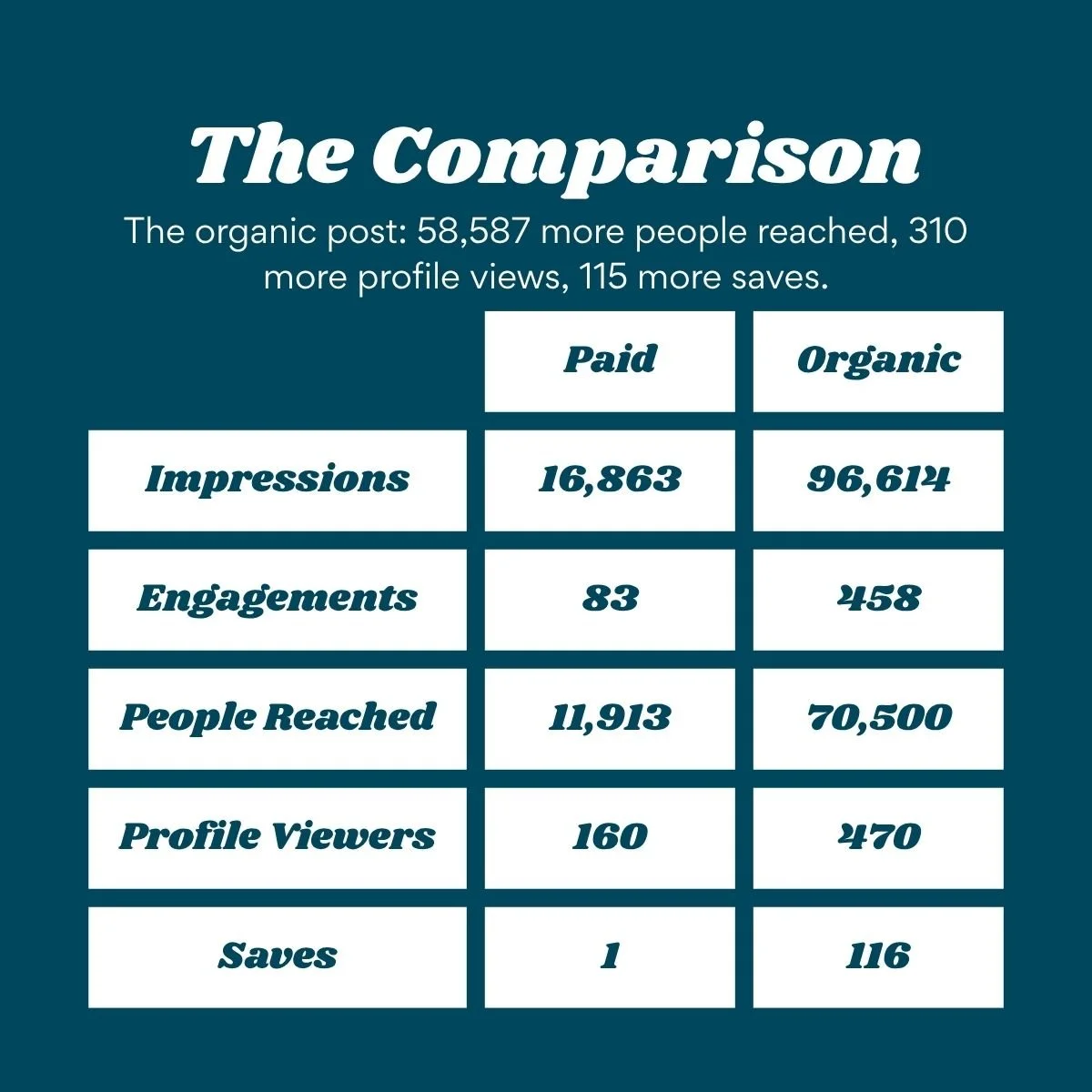
My hypothesis: the message was right, authenticity travels farther than ad spend, and LinkedIn rewards content that keeps people on the platform.
The AEO Play
At my last company, I built two Reddit monitoring agents using Claude Code: one for brand mentions, one for competitor tracking. The whole thing was built on one insight: Reddit gets heavily scraped by AI engines and surfaces in LLMs. The signal is valuable because the content is attributed, structured, and public.
I applied the same logic to my job search.
I created a Reddit profile and started posting things worth indexing: real takes on growth marketing, campaign breakdowns, things that would actually be useful if an AI pulled them into a response. Every post used my full name, consistent terminology, and links back to my portfolio, website, Notion, and LinkedIn. The same infrastructure I'd build for a product: just pointed at myself.
As of May 2026, I'm consistently showing up in Perplexity and ChatGPT.
The Stuff That Doesn't Show Up in a Campaign Brief
Week one looked like this:
Applied to jobs. Updated my resume. Prepped for interviews. Built my portfolio from scratch. Edited my Notion site. Ate oysters and really amazing French food on Tuesday. Also sold my first copy of my Japan travel guide, which I've been working on for months, and finally published.
Week two looked like this:
More interviews. My Reddit play went live. Therapy. Met a friend's new baby. Recorded a video. Not everything is a metric.
Therapy has been part of this from the start. Getting laid off messes with your head even when you know logically that it isn't about you. Having a place to process that separately from the job search meant I could show up to interviews without carrying all of it with me. I'd recommend it to anyone going through a transition, marketer or not.
The hard days still happened. But the pipeline was moving, and that helped.
Week three looked like this:
Built the website over the weekend. Wrote several blog posts. Added schema markup, submitted to Google Search Console, and did the AEO work I'd been planning.
Final round interview on Monday.
A morning at the Birmingham Museum of Art, taking in a Monet to Matisse exhibit on Wednesday.
That afternoon, I got the call. Verbal offer.
It Worked!!!
The CMO of my new company had my LinkedIn profile because it was forwarded to her by someone I'd previously interviewed with. She reached out, then the recruiter reached out. After that, the process moved quickly, and exactly three weeks after my layoff, I signed an offer letter.
The recruiter at my new company said it plainly: "I'm impressed with how you're approaching your job search on LinkedIn via your posts and videos. You're providing a great blueprint for job seekers."
I'm choosing to take that as data.
My job hunt campaign worked exactly the way a good campaign is supposed to: it put the right message in front of the right person at the right time. I didn't engineer that specific outcome. But I built the conditions for it to happen.
Katie Frank is a B2B SaaS growth marketer based in Birmingham, AL. She writes about marketing and travel at katiefrankmarketing.com
